Best Weight Loss Supplements for Women Over 50: A Realistic Guide
Quick Answer: What Actually Helps After 50
No supplement has evidence strong enough to be called the answer, and the honest starting point is that protein, resistance training and sleep do more for body composition after 50 than any capsule. Among ingredients, soluble fibres such as glucomannan have the clearest support for increasing fullness within an energy-restricted diet, and berberine has credible data on glucose and lipid markers at daily doses far higher than most blended products contain. Everything else in this category is either modest, mixed or early.
- Do first: protein at every meal and two resistance sessions a week — these protect muscle.
- Then consider: fibre for satiety; metabolic support as a secondary nudge.
- Always check: interactions, because medication use rises sharply in this age group.
What actually changes after 50 — and what does not
Three things shift, and it helps to separate them from the myths. The first is muscle. From roughly the fourth decade onwards, skeletal muscle mass declines gradually unless it is deliberately trained, and muscle is metabolically active tissue. Less of it means a slightly lower resting energy expenditure, which is real, though it is often exaggerated in marketing copy.
The second is fat distribution. The hormonal changes of the menopausal transition are associated with a shift in where the body stores fat, from the hips and thighs towards the abdomen. Many women describe this as gaining weight when the scale has barely moved — what has changed is shape, and clothes notice before scales do.
The third is sleep and appetite. Disturbed sleep is common in this period, and short or broken sleep is consistently associated with poorer appetite regulation and more snacking the following day. That is not willpower failing. It is a physiological headwind that makes a calorie deficit harder to hold.
What does not change is the underlying arithmetic. Energy balance still governs body weight; it is simply operating on a body with less muscle, a different fat distribution and often more disrupted sleep. That is why the interventions that work best after 50 are the ones that protect muscle and manage appetite, rather than the ones promising to restart a metabolism that has not actually stopped. On the appetite half of that pair, the mechanisms with genuine support behind them are set out in our guide to natural appetite suppressants that actually work.
The ingredients with the most credible evidence
Start with fibre, because it is the least glamorous and the best supported. Soluble fibre slows gastric emptying and increases the sensation of fullness, and it feeds the bacteria in the colon. Glucomannan from konjac root is the one most often used in weight-management products, and European regulators accepted a claim for it in the context of an energy-restricted diet at three grams a day, split into three one-gram doses taken with water before meals. Note both parts of that: the dose is in grams, and the diet is restricted. A capsule containing tens of milligrams is a contribution, not a replication.
Berberine comes next. It has a genuinely substantial clinical literature on glucose handling, insulin sensitivity and lipid markers, with modest secondary effects on body weight and waist circumference — mostly in people with metabolic dysfunction, and mostly alongside dietary change. The trial doses are around 1,000 to 1,500 mg daily, usually split across two or three servings. That figure is worth carrying into any shop, because most combination formulas include a small fraction of it.
Then the gut strains. Bifidobacterium breve is well characterised and widely used. Akkermansia muciniphila is newer and genuinely interesting: it lives in the intestinal mucus layer, it is repeatedly found at lower levels in people with obesity and metabolic dysfunction, and a small 2019 human pilot published in Nature Medicine reported improvements in some metabolic markers with a good safety profile. Promising is the correct word. Proven is not, and larger, longer trials are still needed.
The most effective thing most women over 50 can add is not an ingredient at all. It is enough protein to protect muscle, and enough resistance work to give that protein a reason to be used.
Comparing formulas rather than promises?
If you are weighing up where to buy weight loss supplements safely and want the full ingredient panel and current pricing in front of you before deciding, look at the official page rather than a summary of it.
See the Official Trimoryn OfferHow the best weight loss supplements for women over 50 compare
The table below sets out the main categories marketed to this age group, the strength of the evidence behind each, and the practical catch. Evidence strength here is a plain-language judgement of the human trial base, not a score.
| Approach | Typical studied amount | Evidence strength | The catch |
|---|---|---|---|
| Protein at each meal | Dietary, spread across the day | Strong for preserving muscle | Requires planning, not purchasing |
| Resistance training | Two or more sessions weekly | Strong for body composition | Takes time and consistency |
| Glucomannan fibre | 3 g/day in three doses, with an energy-restricted diet | Moderate for satiety | Capsule amounts are far below trial doses |
| Berberine | 1,000–1,500 mg/day, split | Moderate for metabolic markers | Real drug interactions; small weight effect |
| Akkermansia muciniphila | Pilot-study amounts, higher than typical blends | Early and preliminary | One small pilot is not a conclusion |
| Botanical blends | Varies widely between products | Weak to mixed for weight | Doses rarely match any single study |
| Detox or cleanse products | No standard | No credible support | Marketing category, not a scientific one |
Reading a label when you are over 50
The checks are the same as for anyone, with two additions that matter more with age. First, the standard ones: named ingredients in milligrams rather than a proprietary blend, strains named at species level with a CFU count each, servings per container and capsules per day printed clearly, and a suggested use you can realistically stick to. A one-capsule daily routine is far easier to sustain than a three-times-a-day protocol, and adherence is the difference between a supplement doing something and sitting in a cupboard.
The two additions are interactions and additives. Medication use rises steeply after 50, and several common supplement ingredients interact with common prescriptions. Berberine can lower blood sugar and affects the metabolism of some drugs; concentrated fibres can affect absorption if taken at the same time as tablets, which is why spacing them by a couple of hours is sensible. Read the "other ingredients" line too, for anything you react to.
It is also worth checking what a product does not contain. Many formulas marketed for this age group are stimulant-heavy, and high-caffeine products can worsen exactly the sleep disruption that already makes appetite harder to manage. A non-stimulant formula is not automatically better, but it does avoid that particular own goal. Once a label passes those checks the remaining question is routine rather than choice, and we cover it in how to take a weight loss supplement, timing and dose included.
Where the Trimoryn formula fits this picture
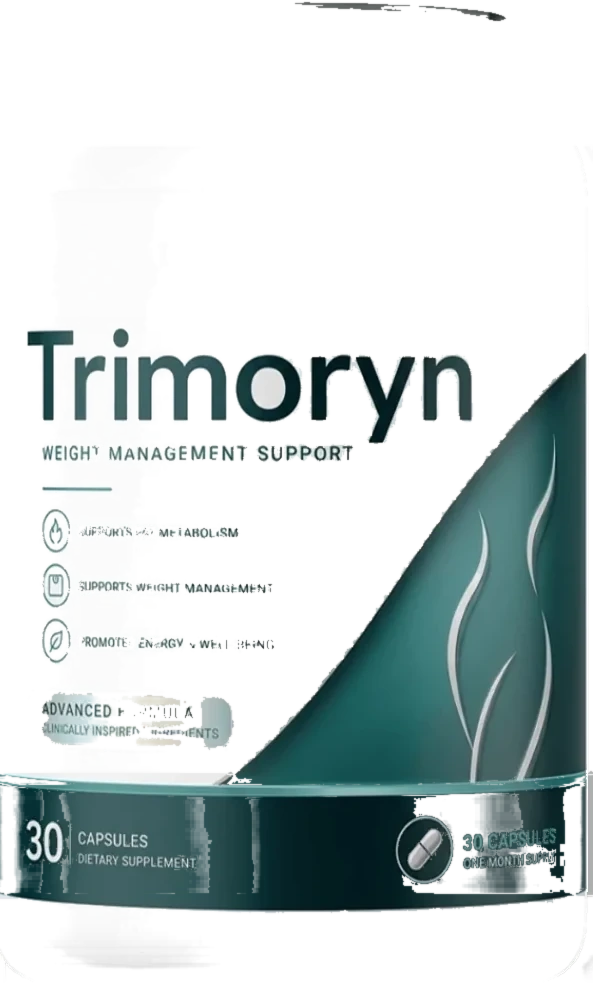
To be concrete about the trade-offs: the Trimoryn formula covered on this site is a once-daily capsule taken 15 to 30 minutes before a meal. Its panel names riboflavin, mangosteen and prickly pear extracts, cinnamon bark extract, konjac fibre standardised to 90% glucomannan, alpha lipoic acid, turmeric, berberine HCl and resveratrol, plus Bifidobacterium breve and Akkermansia muciniphila at one billion CFU each. Every amount is printed, which is what makes an honest assessment possible at all.
Judged against the table above, it is a broad, low-dose formula rather than a high-dose single-ingredient product. The glucomannan is well below the three grams behind the satiety claim, and the berberine is well below the trial range. What it offers instead is breadth and simplicity: several supported pathways nudged at once, in a routine most people will actually keep. Whether that trade is worth it depends on what you want a supplement to do. If you want the fibre effect, eat the fibre. If you want a daily, non-stimulant support product alongside a diet you are already running, this is that shape of product. Our companion guide on what to look for on a gut formula label runs the same checks in more detail.
What supplements in this category cannot do
Plainly stated, because most product pages will not: nothing here treats, cures, prevents or reverses any condition. These are dietary supplements, regulated as foods rather than medicines, and they are not a substitute for medical care. If you are dealing with menopausal symptoms that affect your daily life, that is a conversation for a doctor about evidence-based options, not a reason to buy a botanical blend.
They also cannot deliver the numbers in the advertising. Assessments published by the US National Institutes of Health repeatedly find that weight-loss supplement effects are small at best, that trials are often short and small, and that the quality of evidence is frequently low. Anything promising a specific number of pounds, in a specific number of weeks, without any change in diet, is describing a sales target rather than a study result.
And they cannot replace muscle. This is the point worth ending on, because it is the one that actually changes outcomes after 50. Resistance training two or three times a week, with enough protein spread across the day to support it, is the intervention with the strongest evidence for maintaining body composition, strength and independence as you age. A supplement can sit alongside that. It cannot stand in for it.
Medical note: this article is general information, not medical advice. Speak to a healthcare professional before starting any supplement, especially if you are taking medication, managing a health condition, or going through the menopausal transition.
Frequently asked questions
What are the best weight loss supplements for women over 50?
There is no supplement with strong enough evidence to be called best for this group. The ingredients with the most credible support are soluble fibres such as glucomannan, which increase fullness within an energy-restricted diet, and metabolic compounds such as berberine, which improve glucose and lipid markers at doses far higher than most capsules contain. Protein intake, resistance training and sleep do more for body composition after 50 than any capsule.
Why does weight change after menopause?
Several things shift at once. Muscle mass declines gradually with age unless it is trained, which lowers the energy your body uses at rest. Hormonal changes around menopause are associated with a shift in where fat is stored, from hips and thighs towards the abdomen. Sleep is often more broken, and poor sleep affects appetite regulation. None of this makes weight management impossible, but it does mean the approach that worked at 30 may need adjusting.
Are weight loss supplements safe for women over 50?
That depends entirely on the ingredients and on what else you take. Women over 50 are more likely to be on prescription medication, and several popular supplement ingredients interact with common drugs. Berberine can lower blood sugar and affects how some medicines are metabolised, and concentrated fibres can alter absorption if taken at the same time as tablets. Check any product with a pharmacist or doctor before starting.
Should I take a supplement instead of dieting?
No. Every credible assessment of weight-loss supplements finds effects that are small at best and evidence that is frequently low quality. Supplements are studied as an addition to a calorie-controlled diet and physical activity, never as a replacement for them. If a product is marketed as working without changes to how you eat or move, that is a marketing claim rather than a research finding.
Scientific references
- NIH Office of Dietary Supplements — Dietary Supplements for Weight Loss
- NIH NCCIH — Menopausal Symptoms and Complementary Health Approaches
- Mayo Clinic — Menopause weight gain: Stop the middle age spread
- Harvard T.H. Chan School of Public Health — Healthy Weight
- Xie C. et al. — Combined resistance training and amino acid-based supplementation for sarcopenia in older adults: a systematic review and meta-analysis, BMC Musculoskeletal Disorders (2026)
- Greendale G.A. et al. — Changes in regional fat distribution and anthropometric measures across the menopause transition, Journal of Clinical Endocrinology & Metabolism (2021)
Check the panel before you commit
Every ingredient in milligrams, both strains with their CFU counts, and the current Trimoryn price and guarantee terms — all on the official page.
Check Availability