Berberine for Weight Loss: Dosage, Timeline and Honest Results
Quick Answer: How Do You Dose Berberine for Weight Loss?
For berberine for weight loss, studies use 900 to 2,000 mg a day, split into three or four doses of about 500 mg taken with meals to limit stomach upset. Blood-sugar markers can shift in two to four weeks; weight effects are modest and need eight to twelve weeks. It supports diet and activity rather than replacing them.
- Daily range: 900–2,000 mg, split across three or four meals.
- Timeline: metabolic markers in 2–4 weeks; weight over 8–12 weeks.
- Reality check: the effect is modest, and needs diet and movement.

Interest in berberine for weight loss has climbed sharply, with roughly 40,500 searches a month and a trend line still pointing up, much of it driven by social media calling it “nature's answer” to certain metabolic drugs. That nickname oversells it, but the underlying compound is genuinely interesting: berberine is a plant alkaloid with a substantial body of human research on blood sugar and lipids, and a smaller, more modest signal on body weight. This guide gives you the numbers that matter — how much to take, how to split it, and how long before anything shows — and stays honest about where the evidence stops and where Trimoryn's metabolic angle actually fits.
How much berberine to take per day for weight loss
The dose is the first thing people get wrong, usually by taking far too little. Across clinical trials, the effective daily amount of berberine sits between roughly 900 and 2,000 mg, and the weight-related and metabolic effects consistently show up at the upper half of that range — you generally need more than one gram a day for the body-weight signal to appear at all. Crucially, this is never taken as a single dose. Berberine has a short half-life and a large single amount reliably upsets the stomach, so the daily total is split into three or four doses of around 500 mg, each taken with a meal.
Safety data supports keeping the total sensible: berberine appears well tolerated up to about 1.5 g per day in studies, which lands neatly inside the effective range. Going higher chases diminishing returns while multiplying the digestive side effects. So the practical target for most people experimenting with berberine for weight loss is roughly 1,000 to 1,500 mg daily, divided across meals, held steady rather than cycled aggressively. Anyone taking medication — particularly for blood sugar — should clear this with a doctor first, because berberine is pharmacologically active in a way most supplements are not.
| Question | Evidence-based answer |
|---|---|
| Effective daily dose | ~900–2,000 mg; weight effects need >1 g/day |
| How to split it | 3–4 doses of ~500 mg, each with a meal |
| Upper limit in studies | Well tolerated up to ~1.5 g/day |
| Metabolic marker changes | Often visible in 2–4 weeks |
| Weight changes | Modest, over 8–12 weeks, alongside diet |
The berberine timeline: when to expect changes
Berberine is a slow burn, and setting the timeline correctly is what keeps people from quitting at week two. The earliest thing to move is metabolism, not the scale: at an adequate dose, blood-sugar and insulin-sensitivity markers commonly begin shifting within two to four weeks. These are lab changes you would only notice through testing, not something you feel, which is exactly why patience matters here.
Body weight follows later and lands lighter. The reductions reported in trials are real but modest — small changes in weight and waist circumference — and they typically require eight to twelve weeks of consistent dosing above a gram a day, layered on top of a calorie-controlled diet and activity. If you are picturing a stimulant-style whoosh in the first fortnight, berberine will disappoint you. If you are picturing a gradual metabolic nudge that compounds over a couple of months alongside real diet changes, that is the honest expectation. The deeper mechanistic story, including the gut-bacteria angle, is covered in our review of what the berberine and Akkermansia research actually shows.
Prefer berberine inside a broader metabolic formula?
If you would rather not juggle three or four standalone berberine doses a day, see how a once-daily metabolic formula is built and exactly what its label contains before you decide.
See the Official Trimoryn OfferSide effects and who should be careful
Berberine's side effects are almost entirely digestive and almost entirely dose-related. Diarrhoea, constipation, bloating, cramping and general stomach upset are the common complaints, and they are the direct reason the daily amount is split across meals rather than taken all at once. For most healthy adults these effects are mild and settle as the body adjusts, particularly if you start at the lower end of the range and build up.
The more important cautions are pharmacological. Berberine genuinely lowers blood sugar, which is part of its appeal but also a risk if you already take glucose-lowering medication, where the combination can push blood sugar too low. It also interacts with a range of other drugs by affecting how the liver metabolises them. For that reason berberine is not a casual purchase for everyone: if you are pregnant, nursing, or taking any prescription medication, it needs a conversation with a doctor or pharmacist first. Our broader guide to weight loss supplement side effects and safety puts these cautions in context alongside other common ingredients.
Where berberine fits in Trimoryn — honestly
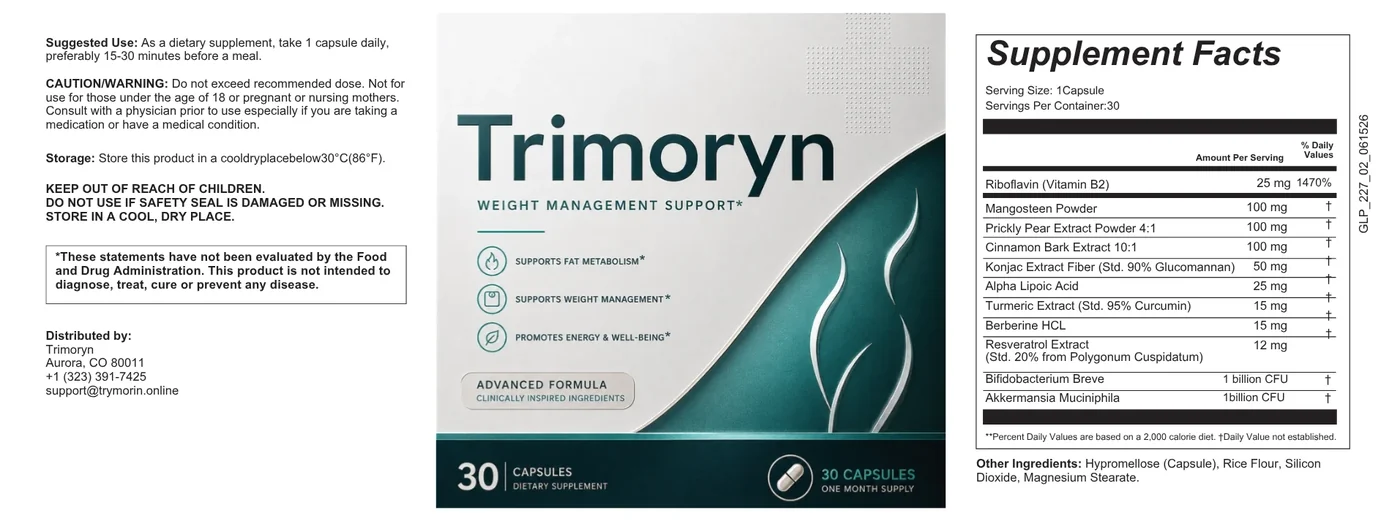
Here is the part most product pages would rather you did not read. Trimoryn contains berberine, but at a supporting amount of 15 mg per capsule, not the gram-plus doses the weight-loss trials used. That is a deliberate design choice, not a hidden flaw: Trimoryn is not a berberine mono-product, it is a fibre-plus-metabolic formula whose primary lever is konjac glucomannan fibre, with berberine, cinnamon bark, prickly pear, alpha lipoic acid, turmeric and resveratrol added as small metabolic nudges, plus two gut strains, Bifidobacterium breve and Akkermansia muciniphila, at one billion CFU each.
So if your specific goal is to replicate the berberine trials, no broad combination capsule — Trimoryn included — will do that at one-a-day, and you should not assume otherwise. What a formula like this offers instead is a gentler, once-daily stack that pushes on several pathways at modest strength alongside diet, which suits people who want convenience and appetite support more than a single-ingredient protocol. Read that way, it is an honest product; read as a berberine megadose, it would be a disappointment. If you are weighing the two headline actives against each other, our side-by-side on glucomannan versus berberine for appetite control lays out which lever does what.
Getting the most out of berberine: a practical routine
If you decide to try standalone berberine for weight loss, the details of how you take it matter almost as much as the dose. Start low and build: begin with a single 500 mg dose with your largest meal for the first few days, watch how your digestion responds, then add a second and third dose with other meals over a week or two until you reach your target. This gentle ramp is the simplest way to avoid the diarrhoea and cramping that make people quit in the first fortnight, and it lets you find the amount your stomach tolerates rather than guessing.
Consistency beats intensity. Because berberine works gradually on metabolism, the person who takes a steady 1,000 to 1,500 mg a day for twelve weeks will almost always do better than the one who takes 2,000 mg for a week, stops when the scale does not move, and restarts a month later. Pair it with the habits that actually drive weight change — a modest calorie deficit, more protein, more fibre and regular movement — and treat the supplement as the smallest lever in that set, not the main one. Berberine can support a good plan; it cannot rescue the absence of one, and no honest reading of the trials suggests otherwise.
Two myths about berberine worth clearing up
Myth: berberine is “natural Ozempic”. This comparison went viral and it is misleading. Prescription GLP-1 medications produce large, well-documented weight reductions in trials; berberine produces small, secondary ones. They work through different mechanisms and are not in the same league of effect. Berberine is a legitimate metabolic-support supplement, not a substitute for a medication, and framing it as one sets you up to feel cheated.
Myth: if a little is in my multivitamin, I am covered. Because effects are so dose-dependent, a token amount of berberine tucked into a blend does not deliver the trial-level exposure. That does not make small inclusions pointless — they contribute to a combination — but it does mean you cannot assume the whole berberine research base transfers to 10 or 15 mg. Always read the milligrams, and judge the product on what it actually contains rather than on the ingredient's reputation. For the wider question of whether any of these pills earn their place, see our honest look at whether weight loss pills actually work.
Medical note: this article is general information, not medical advice. Berberine can lower blood sugar and interacts with several medications. Speak to a healthcare professional before starting it, especially if you are pregnant, nursing, taking prescription drugs or managing a health condition such as diabetes.
Related reading
Frequently asked questions
How much berberine should I take per day for weight loss?
Clinical trials typically use 900 to 2,000 mg of berberine a day, split into three or four doses of around 500 mg taken with meals, because a single large dose upsets the stomach. Weight-related effects generally need more than one gram daily sustained over eight to twelve weeks. Most combination supplements contain far less, so the label figure is worth checking against that trial range.
How long does berberine take to show results?
Blood-sugar and metabolic markers can begin to shift within two to four weeks at an adequate dose. Weight-related changes are slower and more modest, usually needing eight to twelve weeks of consistent use above one gram a day alongside diet and activity. Berberine is a gradual metabolic-support compound, not a fast fat burner, and expectations should be set accordingly.
What are the side effects of berberine?
The most common side effects are mild and digestive: diarrhoea, constipation, bloating, cramping and stomach upset, which is why the daily amount is split across meals. Berberine can also lower blood sugar and interacts with several medications, so it is not suitable for everyone. Anyone pregnant, nursing, or taking prescription drugs should speak to a doctor or pharmacist before starting.
Should I take berberine with meals?
Yes. Berberine is usually taken with or shortly after meals, both to reduce stomach upset and because part of its effect is on how the body handles the glucose from that meal. Splitting the daily amount into three or four smaller doses across the day's meals is the standard approach in studies and is gentler on digestion than one large dose.
Scientific references
- NIH Office of Dietary Supplements — Dietary Supplements for Weight Loss
- Asbaghi O. et al. — The effect of berberine supplementation on obesity parameters, inflammation and liver function enzymes: a systematic review and meta-analysis of randomized controlled trials, Clinical Nutrition ESPEN (2020)
- Liu D. et al. — Efficacy and safety of berberine on the components of metabolic syndrome: a systematic review and meta-analysis of randomized placebo-controlled trials, Frontiers in Pharmacology (2025)
- NIH NCCIH — Weight Loss and Dietary Supplements: What You Need To Know
- Depommier C. et al. — Akkermansia muciniphila in overweight and obese volunteers, Nature Medicine (2019)
See the full Trimoryn metabolic formula
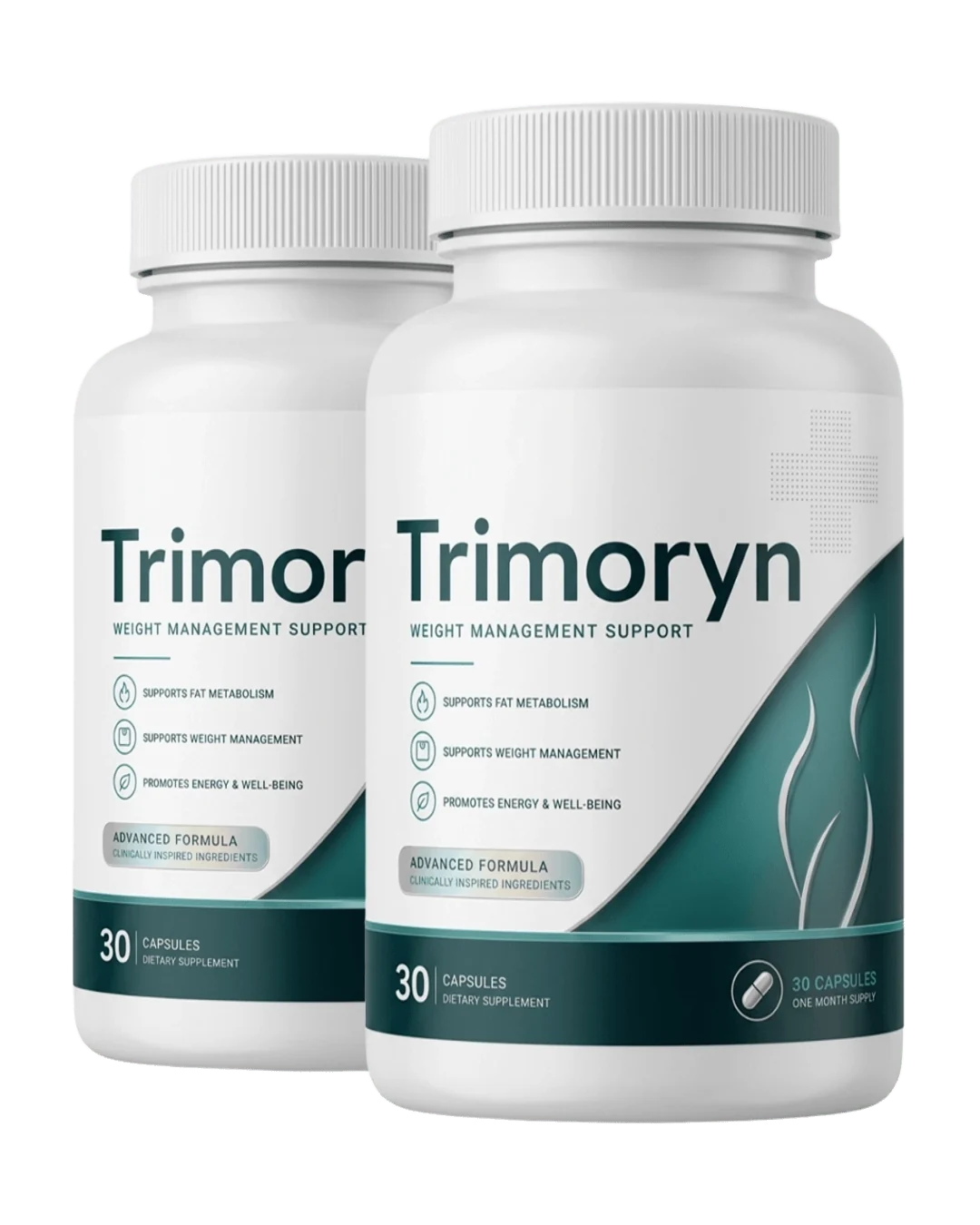
Berberine as one part of a fibre-first metabolic stack with konjac glucomannan and two named gut strains — every amount printed, with the current price and money-back guarantee on the official page.
Check Availability & Price